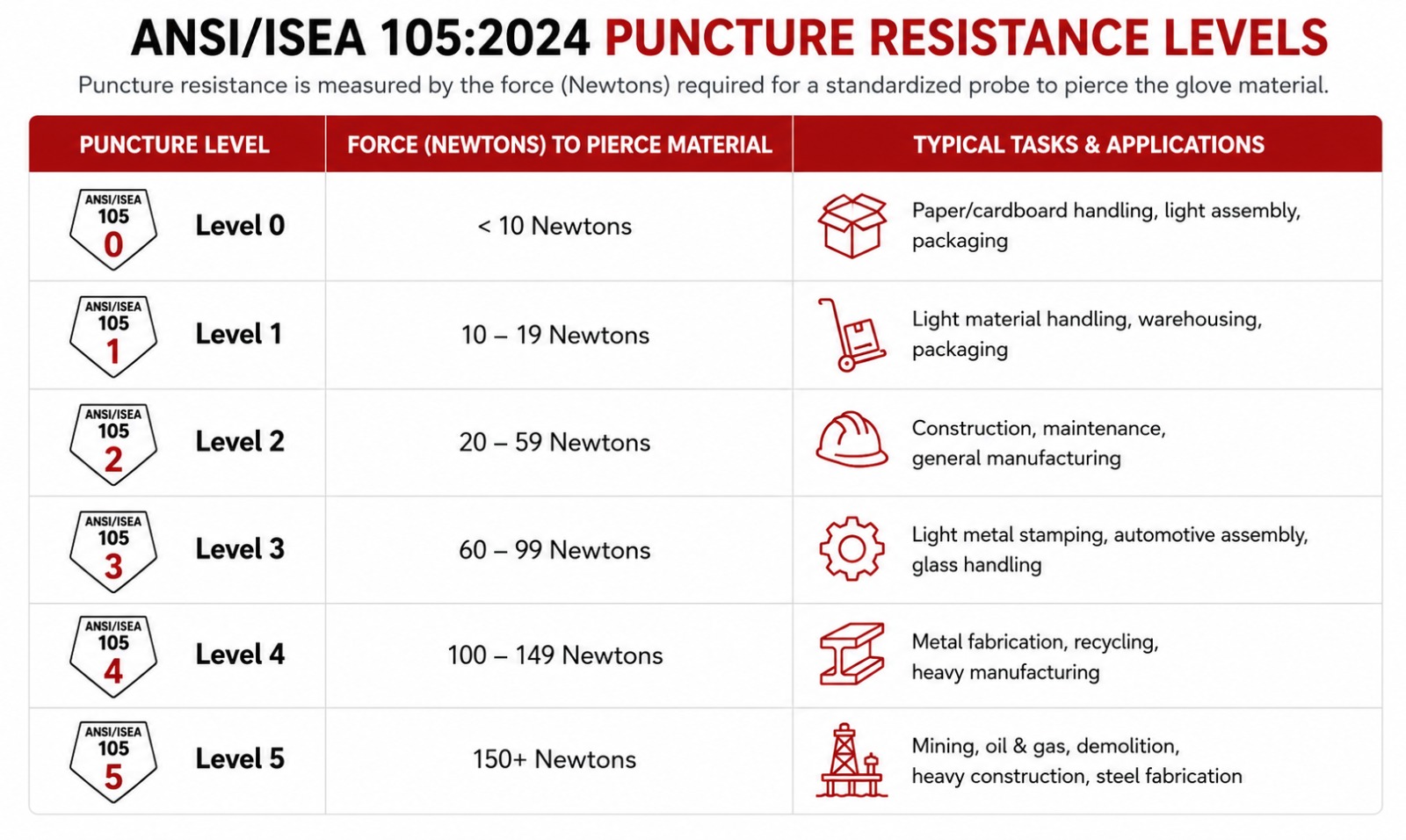
ANSI/ISEA 105 and EN 388 puncture resistance standards help evaluate how effectively safety gloves protect against injuries caused by sharp or pointed objects.
Unlike cut resistance, which measures protection against blades, or abrasion resistance, which evaluates wear from friction, puncture resistance measures a glove's ability to resist penetration from objects such as nails, wires, metal fragments, and sharp tools. Selecting the appropriate puncture-resistant gloves based on workplace hazards helps reduce hand injuries, improve worker safety, and ensure compliance with recognized PPE standards.
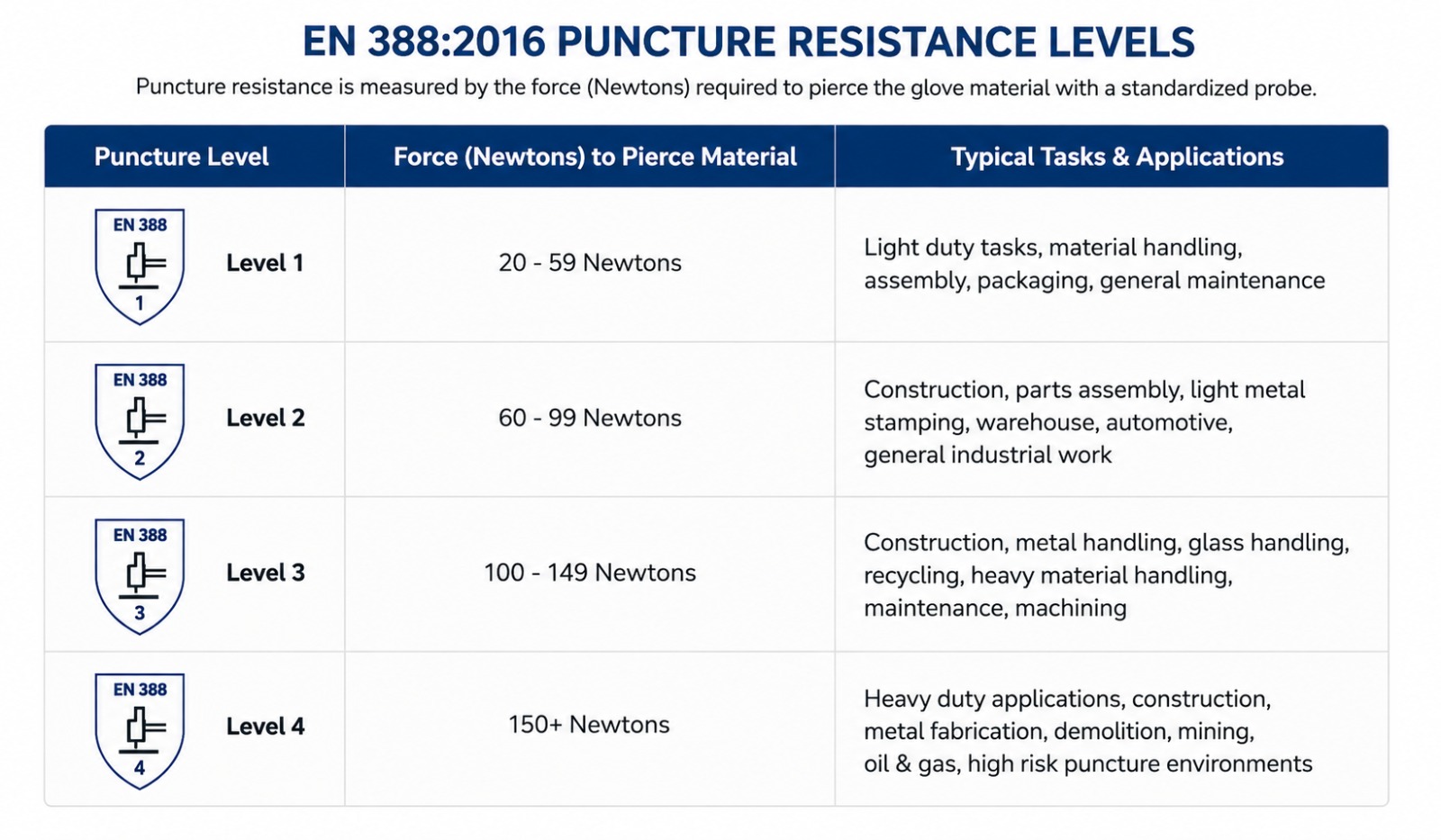
Puncture resistance measures a glove's ability to resist penetration from sharp or pointed objects. During standardized testing, the force required to puncture the glove material is measured in Newtons (N) to determine its level of protection.
ANSI/ISEA 105 rates puncture resistance from Level 0 to Level 5, while EN 388 classifies puncture resistance from Level 1 to Level 4. In both standards, higher ratings indicate greater protection against puncture hazards.
High-performance puncture-resistant gloves are ideal for industries such as construction, metal fabrication, manufacturing, automotive, recycling, warehousing, and material handling, where workers frequently encounter nails, wires, sharp tools, and metal components.
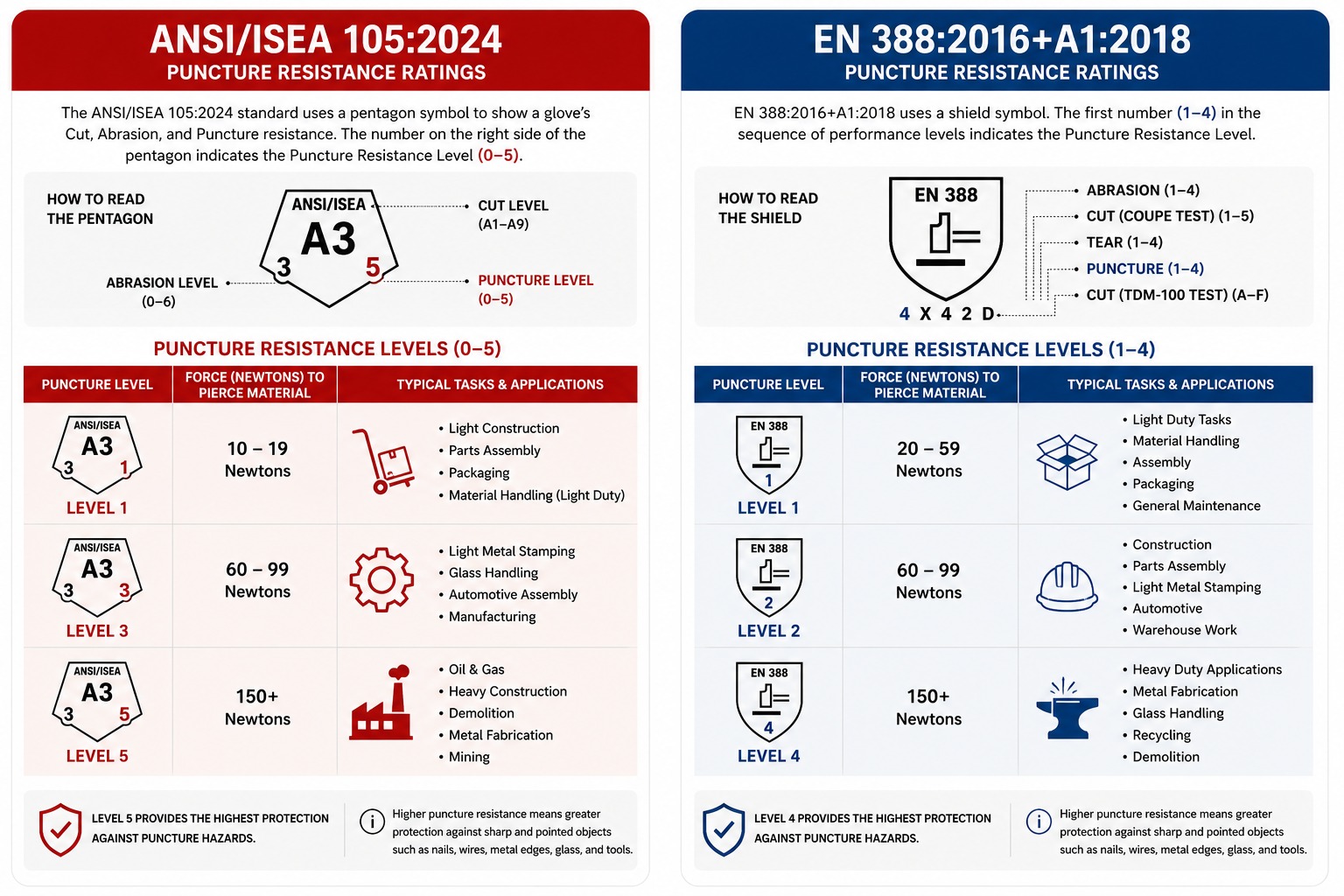
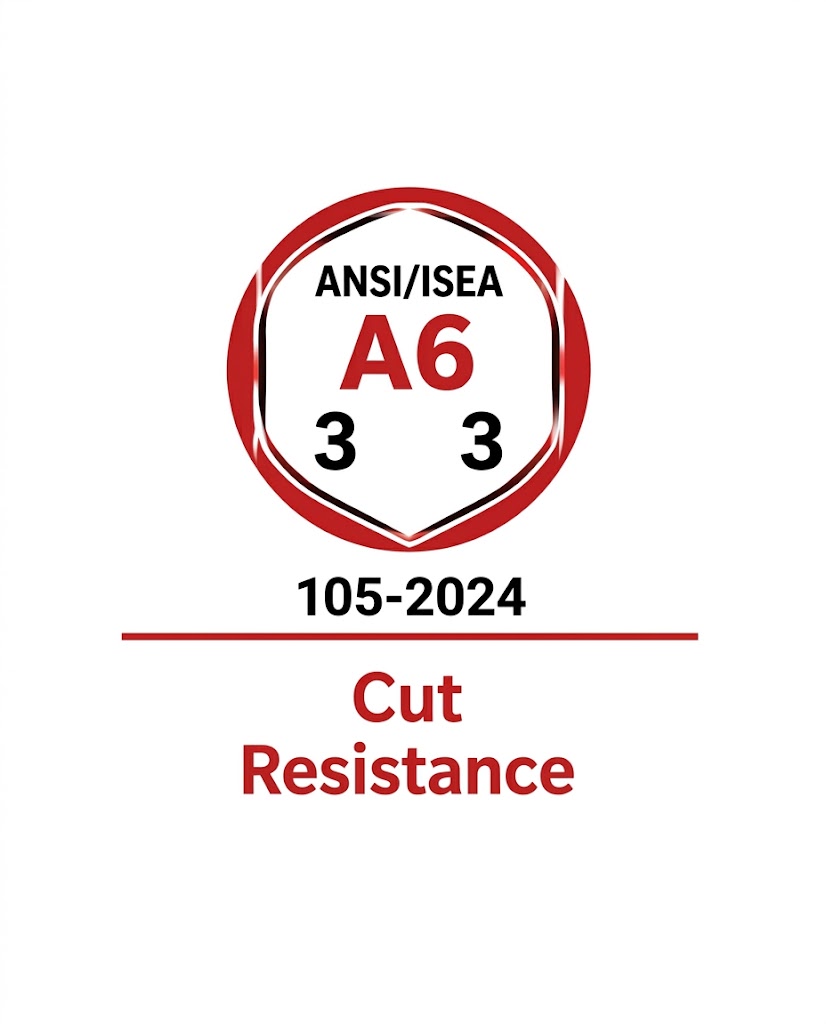
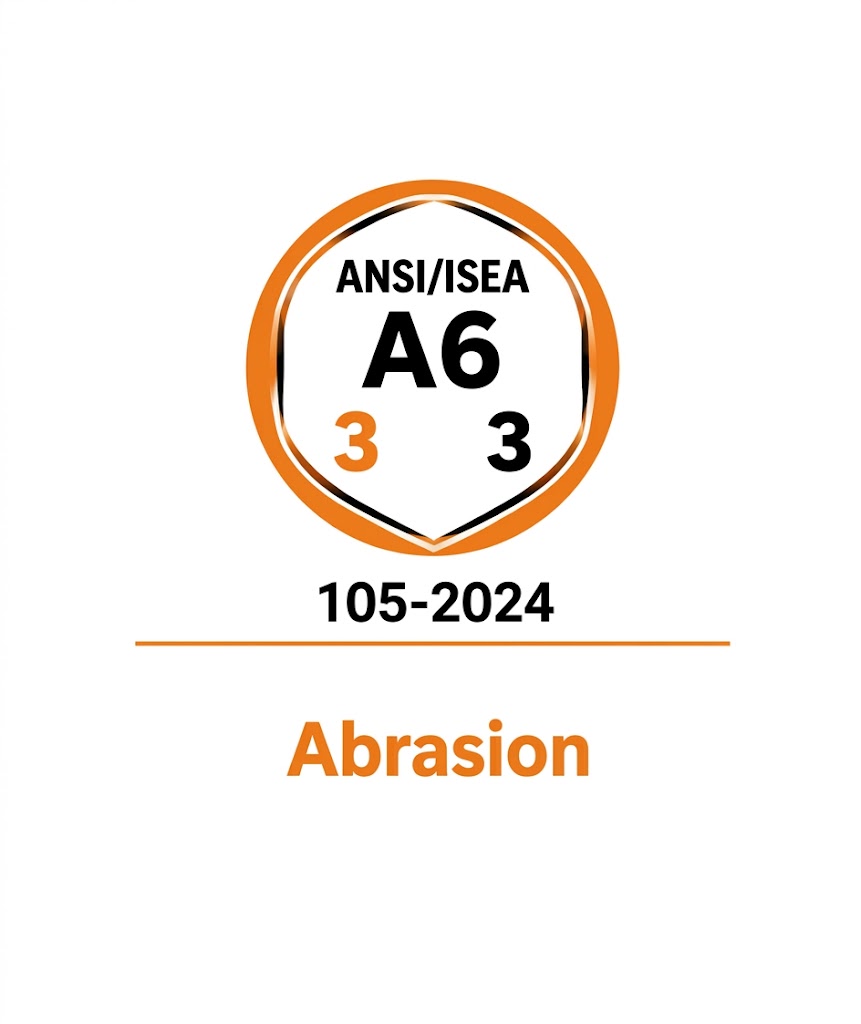
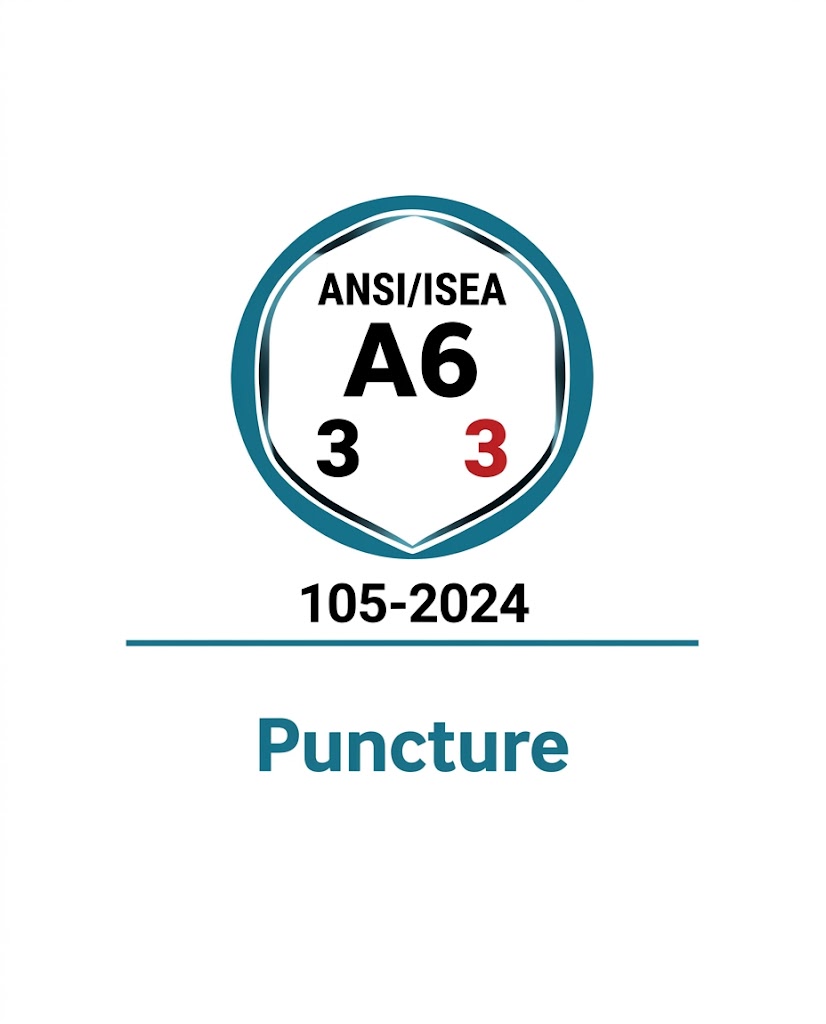
The ANSI/ISEA 105:2024 standard introduces a new pentagon-shaped pictogram that clearly displays a glove's cut, abrasion, and puncture resistance ratings. The right side of the pictogram indicates the puncture resistance level (0–5), with Level 5 providing the highest protection against puncture hazards.
Similarly, EN 388 measures puncture resistance on a Level 1–4 scale, with Level 4 offering the highest level of protection. Both standards help employers and workers choose the right puncture-resistant safety gloves for industries such as construction, manufacturing, metal fabrication, recycling, warehousing, and material handling, where protection against sharp and pointed objects is essential.
Although both involve penetration hazards, puncture resistance and needlestick resistance are designed for different applications.
Puncture injuries can lead to serious hand injuries, increased downtime, and higher operating costs. Selecting ANSI/ISEA 105 and EN 388 certified puncture-resistant gloves ensures workers receive the appropriate level of protection for their specific tasks.
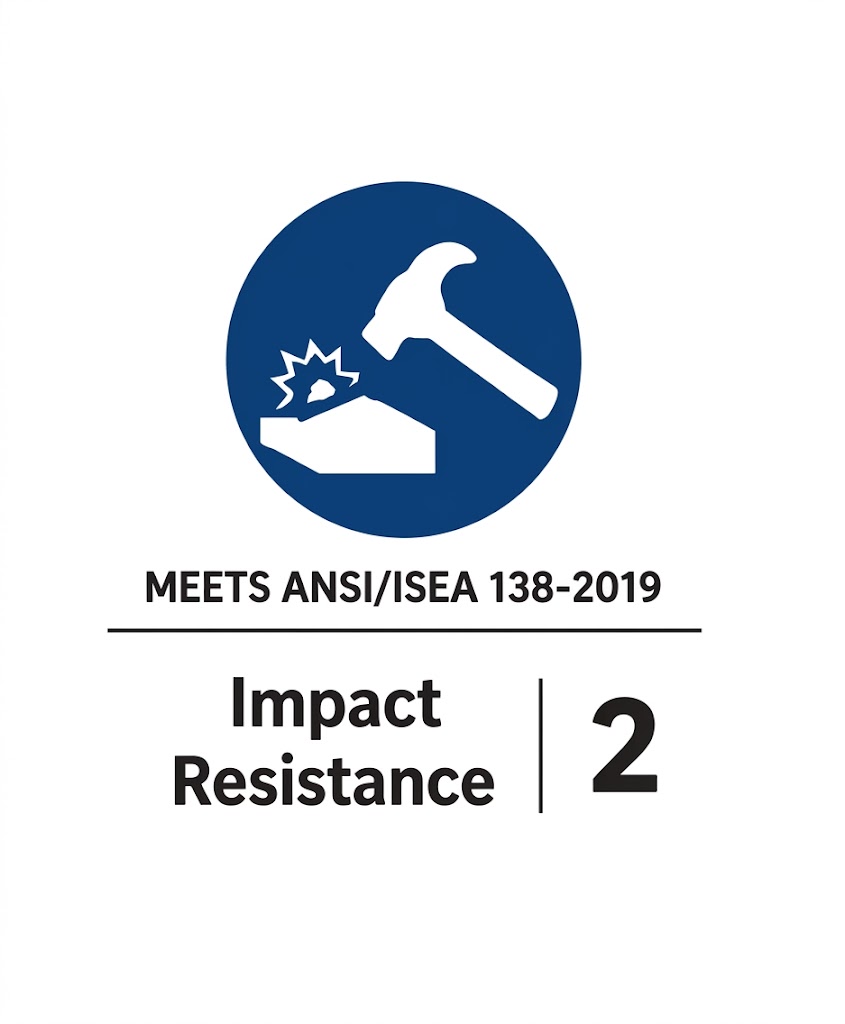
Don't rely on lookalike safety claims. Partner with Guard Gloves as your direct contract manufacturer to deploy premium, certified private-label impact lines built precisely to global legal frameworks. Request Custom Factory Samples Today.