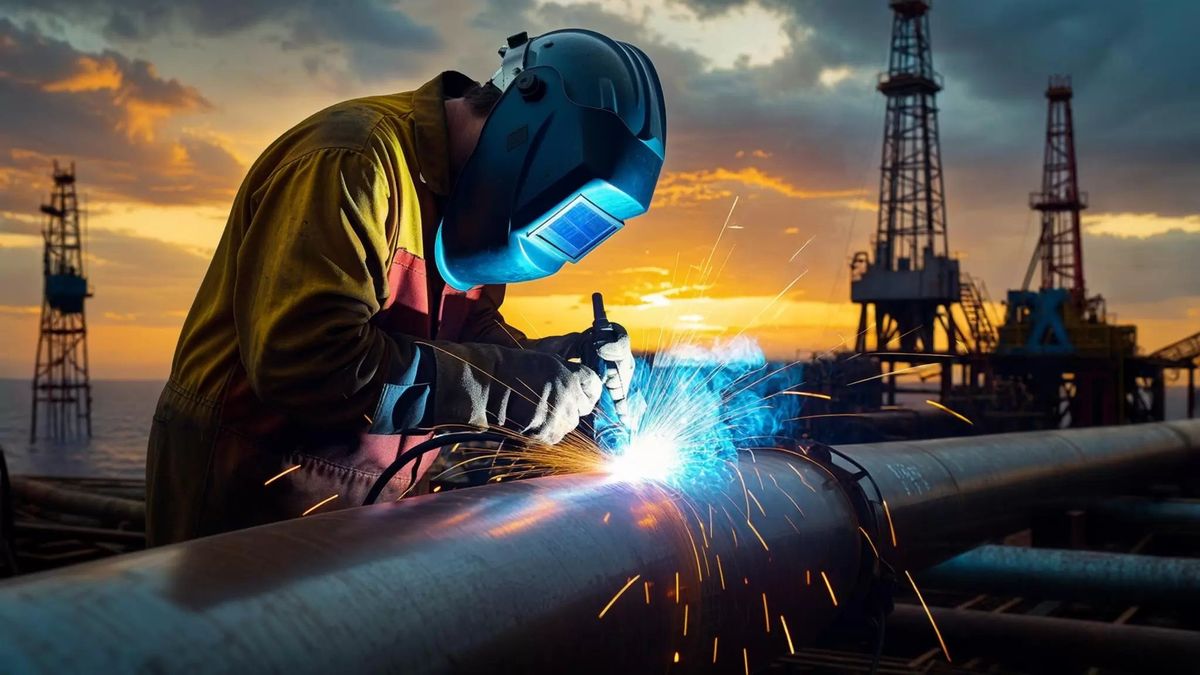
The Ultimate Sourcing Guide: Selecting the Perfect Welding Gloves for Performance and Safety

Welcome to our comprehensive welding series! Whether you are a seasoned professional managing high-volume industrial production or a distributor sourcing gear for your clients, choosing the correct hand protection is a critical decision.

The truth is, the right pair of welding gloves does far more than just shield skin—it directly impacts a welder's speed, precision, and overall work results.

The real secret to finding the perfect glove lies in balancing two critical factors: maximum finger dexterity and robust heat protection. In this step-by-step guide, we are breaking down the essential fundamentals you need to evaluate before adding a single pair of gloves to your inventory or workspace. Let's dive in. maximum finger dexterity and robust heat protection. In this step-by-step guide, we are breaking down the essential fundamentals you need to evaluate before adding a single pair of gloves to your inventory or workspace. Let's dive in.

Understanding Arc Welding (Stick Smaw)
High Heat & Heavy Splatter

As one of the most prevalent industrial bonding techniques, Arc welding is a staple in structural steel assembly. By utilizing an electric arc to melt a coated metal electrode into the joint, it binds heavy metals together with incredible strength. However, this high-energy process also produces the most intense workplace hazards—namely extreme temperatures, heavy sparking, and unpredictable molten metal splashes. Selecting heavy-duty, heat-resistant work gloves with reinforced leather shielding is the only way to safeguard operators against the severe thermal risks of this specific welding method.

Mastering MIG Welding:
Continuous Production & Thermal Resistance

Next up is MIG welding—the true workhorse of high-volume manufacturing. Because it is incredibly versatile and reliable, it is the go-to method for most everyday welding jobs and extended production shifts. MIG welding works by using electricity to strike an arc between a continuously fed wire electrode and the metal workpiece, smoothly joining them together.

However, because it's built for speed and volume, it can get pretty messy. While it doesn't require the delicate, ultra-fine precision of TIG welding, it produces a significant amount of flying sparks and a constant spatter of molten metal. If your team is handling long hours on a busy fabrication line, they need a comfortable, highly durable glove that handles repetitive heat exposure without wearing out.

Exploring TIG Welding
Technical Accuracy & Premium Dexterity

TIG welding represents the pinnacle of specialized metal joining, relying on a sophisticated electric arc from a tungsten electrode to fuse critical components. Due to the high-precision nature of this manual application, the operator’s physical feedback loop is paramount. Unlike heavy-spatter environments, safety management for TIG applications focuses heavily on minimizing hand fatigue and maximizing touch sensitivity. Consequently, an effective TIG protective glove is engineered with thin, supple grain leathers that deliver superior flexibility rather than dense thermal padding—ensuring the uncompromised dexterity necessary for intricate, high-spec fabrication.

Welding Safety Showcase

Sourcing the Right Materials:
Why Leather Dominates Welding Glove Manufacturing

When it comes to reliable hand protection, leather remains the undisputed gold standard for industrial welding gloves. As a natural, breathable material, leather inherently acclimates to ambient temperature and workplace humidity. It delivers an unmatched combination of rugged durability, flexibility, and natural non-conductive properties that safely dissipate extreme heat.

Because different welding methods create unique environmental hazards—ranging from heavy molten spatter to close-proximity radiant heat—the specific cut and type of leather hide used matters immensely. Choosing the right split-leather or top-grain material ensures your operators get the exact balance of thermal shielding and movement required for their specific welding tasks. Below are the different types of leather that are fit for each welding procedure:

Top-Grain Cowhide: The Industrial Standard for All-Around Durability

Cowhide remains the most widely utilized material in welding glove manufacturing due to its exceptional tensile strength, rugged thickness, and long-term durability. It offers a naturally tough barrier against abrasions while maintaining enough flexibility for heavy tool handling, making it a reliable staple for general fabrication gear.

Highly Recommended For:

Standard MIG Welding (GMAW) and general shop fabrication work where a balance of durability, cost-efficiency, and standard heat protection is required.

Premium Buffalo Leather: Rugged Defense and High Abrasion Resistance

Buffalo leather is highly sought after for high-impact environments due to its uniquely dense, thick fiber structure. As one of the toughest natural hides available on the market, it provides exceptional puncture, tear, and abrasion resistance. Because its grain is naturally larger and deeper than standard cowhide, it offers excellent thermal insulation and handles extreme friction without wearing thin—making it a long-lasting favorite.

Highly Recommended For:

Heavy-duty, high-volume MIG Welding and high-intensity structural work where gloves are exposed to extreme mechanical friction and constant grinding.

Split Leather: Maximum Thermal Shielding for Intense Heat

Created by separating the rough underside of a hide from the smooth outer grain, split leather is the absolute go-to for heavy-duty protection. Its dense, fibrous texture makes it highly resistant to punctures, flying sparks, and heavy molten spatter. Because it offers the highest level of thermal insulation, split cowhide keeps hands safe during long, intense heat cycles.

Highly Recommended For:

Arc / Stick Welding (SMAW) and high-amperage commercial welding operations where defending against heavy flying spatter, slag, and intense radiant heat is the top safety priority.

Premium Goatskin: The Ultimate Choice for High Dexterity

For applications where tool control is critical, goatskin is a premium alternative to heavier hides. It delivers an incredible strength-to-weight ratio, matching the wear resistance of cowhide while remaining significantly thinner and more pliable. Because it allows for maximum finger dexterity and touch sensitivity, it stands as an industry favorite for clean, professional finishes.

Highly Recommended For:

High-precision TIG Welding (GTAW) where the operator must maintain absolute control over the torch and manually feed filler rods with razor-sharp accuracy.

Fine-Grain Sheepskin: Maximum Comfort and Tactile Touch Sensitivity

Premium sheepskin is a premier choice for high-precision welding environments due to its naturally fine-grained, lightweight profile. It molds beautifully to the welder's hand right out of the box, offering an incredibly soft, comfortable feel and high fingertip dexterity. For operators executing delicate torch movements, sheepskin provides the excellent tactile feedback required for clean, intricate weld beads.

Highly Recommended For:

Specialist or high-frequency TIG Welding applications where minimizing hand fatigue and achieving the absolute highest level of touch sensitivity takes priority over rugged wear.

Supple Deerskin: Luxurious Flexibility and Fine Precision Feel

Deerskin is highly prized for its ultra-soft, elastic texture that provides an unparalleled "second-skin" feel. While it is a more specialized, luxury choice in industrial settings, its exceptional flexibility and fine tactile feedback make it perfectly suited for technical welding procedures where operators need maximum control over their equipment.

Highly Recommended For:

Specialty TIG Welding applications, mirror welding, or delicate custom fabrication work involving thin-gauge metals like stainless steel or aluminum.

Heavy-Duty Elk & Mooseskin: Premium Heat Defense Against Hardening

Unlike standard hides that can dry out and shrink over time, premium elk and mooseskin leather possess a unique physical structure that resists hardening when exposed to constant, extreme heat. By remaining soft and pliable even after intense thermal exposure, this heavy-duty material significantly reduces hand fatigue on high-heat production lines.

Highly Recommended For:

High-amperage Arc / Stick Welding and heavy pipe welding where the glove must endure massive, sustained thermal energy without shrinking, cracking, or becoming stiff.

Understanding EN 12477:
The Compliance Standard for Welding Gloves

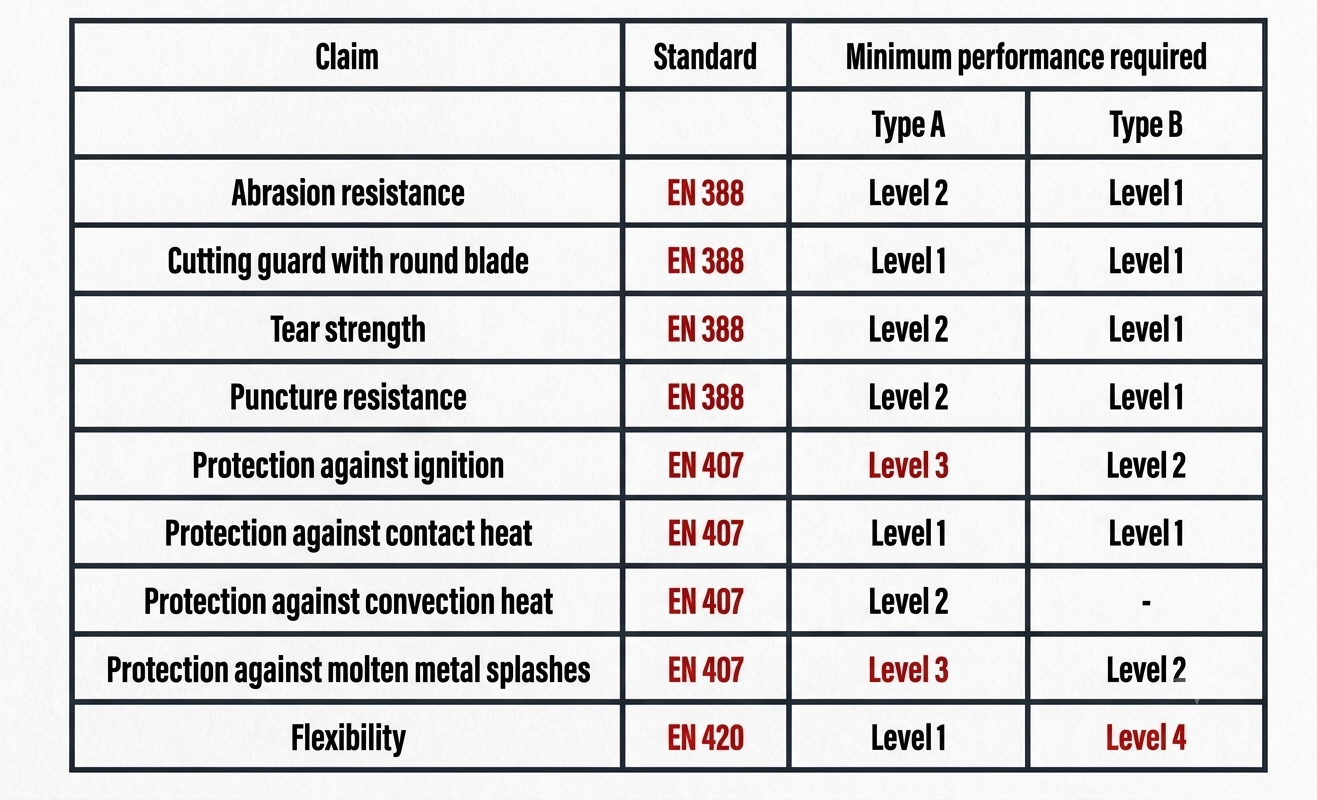
EN 12477:2001 + A1:2005 is the official safety standard guaranteeing that welding gloves provide verified, lab-tested defense against severe mechanical and thermal workplace hazards. To earn this certification, gloves must pass a rigorous combination of three core testing frameworks:

EN 388

Mechanical Durability: Verifies high resistance to abrasions, tears, punctures, and blade cuts.

EN 407

Thermal Insulation: Proves the leather handles molten metal spatter, contact heat, convective heat, and flame spread.

EN ISO 21420

General Fitness: Ensures proper glove sizing, ergonomic comfort, and safe material construction.

Type A vs. Type B Welding Gloves: Balancing Thermal Insulation and Dexterity

The standard categorizes certified gloves into two distinct functional tiers based on construction thickness and application needs:

🔥 Type A: High Heat Defense

Engineered with thicker leather layers and dense structural fibers to provide maximum defense against intense radiant heat, heavy slag, and flying sparks. Sacrifices some fingertip dexterity for heavy thermal shielding.

Highly Recommended For: Arc / Stick Welding (SMAW) & heavy-duty high-amperage fabrication.

🎯 Type B: Premium Dexterity

Crafted using thinner, highly pliable grain leathers that prioritize uncompromised movement, finger flexibility, and micro-tactile feel. Features streamlined thermal padding to preserve torch control.

Highly Recommended For: High-Precision TIG Welding (GTAW) and manual filler rod feeding.
⚙️ What About MIG Welding Applications?

For MIG Welding (GMAW), procurement managers mostly utilize Type B gloves to ensure operators have sufficient hand dexterity for continuous line production. However, Type A gloves are also frequently deployed on MIG production floors when running high-wire feed speeds or managing heavy structural metal passes that generate severe radiant heat.

The following matrix illustrates how to select the ideal welding glove based on specific process requirements and international safety standards.
Welding Safety Showcase

Match Your Glove to Your Weld: The Safety Formula

Professional welding demands a precise balance of heat protection and hand dexterity. Sourcing the wrong gear can compromise both operator safety and line productivity.

  • MIG & Arc (Stick) Welding: Requires a heavy-duty thermal barrier with maximum heat insulation to eliminate severe burn risks from high radiant energy and flying spatter.
  • Precision TIG Welding: Demands ultra-pliable, lightweight materials that deliver maximum finger dexterity and touch sensitivity paired with essential baseline heat protection.
The Compliance Shortcut:Always look for EN 12477 certification. This international standard guarantees the glove has been lab-tested for mechanical durability and thermal defense, helping you make data-backed procurement decisions in seconds.